
Food Court Kitchen Equipment Setup
A good food court kitchen setup starts with a small counter, a short menu and a very busy lunch hour. Chefs Shop makes the equipment in its own factory and plans the full kitchen with you, for one stall or for a whole food court, anywhere in India.
- Own factory
- Support across India
- Single stall to full food court
- Layout, menu and equipment help
Get a Free Quote
Tell us a little about your project, no charge for the first call.
Made for people who cook in small spaces and serve in big crowds
Food court kitchen equipment is not the same as restaurant kitchen equipment. This page is written for three kinds of owners.
You are opening one stall
You have a counter in a mall or a food hall and need to know which machines to buy, what size to pick and how to fit them. Start with the checklist and the sizing steps below.
You run a brand and want a counter
Your food is already known and now you want to put it in a food court. You need a kitchen that makes the same taste every day, fast, with a small team.
You are building a food court
You want many outlets under one roof with shared wash, storage and power. You need one partner who can plan all stalls so that nothing clashes.
How a food court kitchen is different from a restaurant kitchen
Many owners copy a restaurant kitchen into a food court stall and run into trouble in the first month. Five things change.
- 1
The space is small
A stall may have only a counter and a small back area. Every machine must earn its place, and a machine that is too big blocks the line.
- 2
The menu is short and fast
Most stalls sell 8 to 15 dishes that cook in a few minutes. Your equipment should match those dishes, not a long restaurant menu.
- 3
The rush is sharp
Customers come in waves at lunch, dinner and on weekends. A kitchen that is fine at 4 pm can fail at 1 pm.
- 4
The mall has its own rules
Gas, power load, fire safety and exhaust are often controlled by the mall. Check these before you order anything.
- 5
Some things are shared
Power, drains, ducts and sometimes the wash area are shared with other stalls. Your plan must work inside those limits.
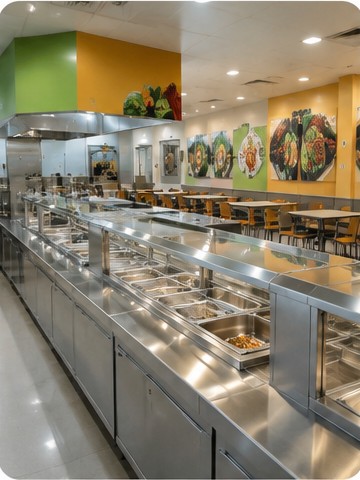
| Point | Restaurant kitchen | Food court stall |
|---|---|---|
| Space | Large room | Small counter and back area |
| Menu | Long, many dishes | Short, quick dishes |
| Rush | Spread over the evening | Sharp peaks at meal times |
| Gas | Cylinders are common | Often limited by the mall |
| Exhaust | Own hood and duct | Mall duct and mall rules |
| Washing | Own wash room | Small sink or shared wash area |
Food court kitchen equipment, zone by zone
Split your stall into seven zones. Go through each zone one by one and you will not miss a machine. Pick only what your menu needs. This list covers commercial kitchen equipment for food court stalls of every size.
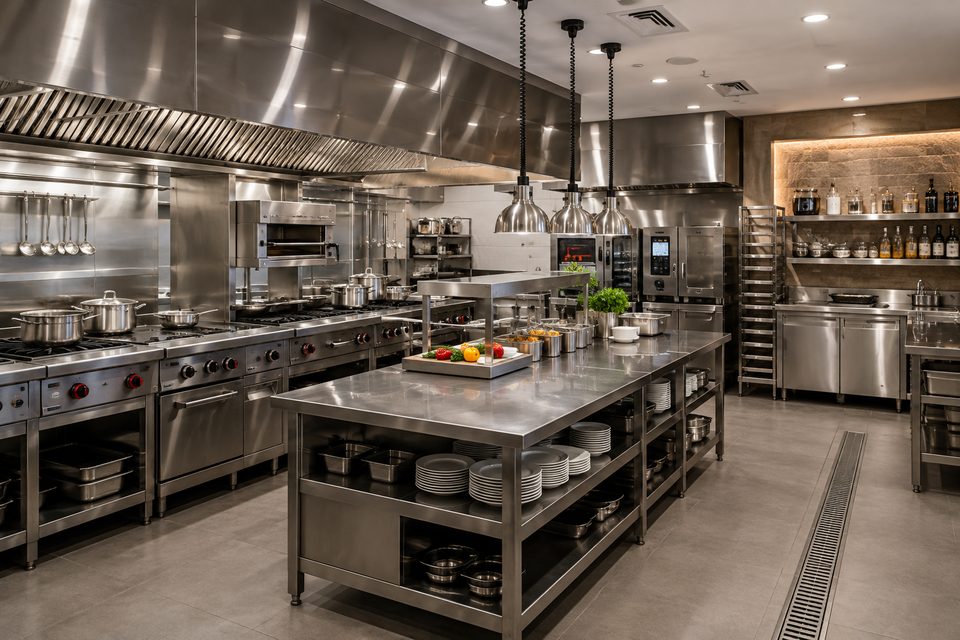
How to use this checklist
Write down your menu first. Next to each dish, note the machine it needs. Then match that machine to a zone below. The items you do not need are simply skipped.
We make most of the machines in this list, so we can suggest a size that fits your counter. See our full range of commercial kitchen equipment.
Check mall rules firstZONE 1Cooking
- Chinese kitchen range for wok dishes
- Four burner gas range for gravies and rice
- Electric griddle for tawa items and burgers
- Electric double fryer for snacks and fries
- Momo steamer and idli steamer
ZONE 2Cold storage
- Under counter chiller to keep sauces and toppings close
- Deep freezer for frozen stock
- Ice cube machine for drinks and shakes
ZONE 3Prep
- Vegetable cutter to save hours of cutting
- Wet grinder for batter and paste
- Stainless steel work table with sink
- Cutting boards and prep tubs
ZONE 4Washing
- Hood type dishwasher for plates and trays
- Utensil soaking wall rack to save floor space
- Pot wash sink with a drain board
ZONE 5Dry storage
- Wall storage cabinet for dry stock
- Racks for oil, flour, spice and packing material
- Closed bins for rice and pulses
ZONE 6Serving and holding
- Hot bain marie to keep gravies warm
- Garnish pan counter for toppings
- Display counter at the customer side
ZONE 7Exhaust and safety
- Stainless steel exhaust hood with baffle filters over every cooking line
- Fire extinguisher placed near the cooking line
- Grease trap or filter, if the mall asks for it
- Anti skid mats near the fryer and the wash area
Which machines does your kind of stall need?
Your menu decides your machines. Use this table as a starting point and then change it for your own dishes.
| Stall type | Cooking | Cold and prep | Serving and extras |
|---|---|---|---|
| North Indian | Gas range, electric roti maker | Chiller, vegetable cutter | Bain marie, hood |
| Chinese and momos | Chinese range, momo steamer | Deep freezer, momo sheeter | Hood, garnish counter |
| South Indian | Gas griddle, idli steamer | Wet grinder, chiller | Bain marie for sambar and chutney |
| Snacks and chaat | Electric fryer, griddle | Under counter chiller | Gol gappa machine, topping counter |
| Pizza and burger | Pizza oven, griddle, fryer | Pizza make line | Display counter |
| Desserts and drinks | Softy machine, coffee machine | Deep freezer, ice cube machine | Bubble tea machine, premix storage |
These are starting lists only. A stall with a short menu may need fewer machines than shown here.
How to pick the right size of machine for your peak hour
Most food court stalls do not fail because the food is bad. They fail because the kitchen cannot keep up at 1 pm. Use these four steps to avoid it.
List your menu
Write every dish you plan to sell. Keep it short for the first month.
Guess your busiest hour
Think of the best hour on a weekend. How many plates will you sell in that one hour?
Find the cooking time
Check how many minutes each dish needs on a burner, griddle or fryer.
Divide and add one spare
Divide the plates you need per hour by the plates one burner or machine can make per hour. Then add one extra for a rush day or a breakdown.
Worked example (for understanding only)
A Chinese stall expects 60 plates in its busiest hour. One wok dish takes about 3 minutes on a burner, so one burner makes about 20 plates in an hour.
60 plates divided by 20 plates per burner is 3 burners. Add one spare and the stall needs 4 burners on its Chinese range.
Your own numbers will be different. Pre-cooked gravies and sauces can also cut the number of burners you need.
Do not guess alone
Send us your menu and your expected plates per hour. We will suggest the machine sizes for your stall.
Send menu on WhatsAppPlan the path of the food before you place a single machine
Food should move in one direction, from the back door to the customer. This keeps the work fast and the kitchen clean.
Receive
Raw items come in
Store
Cold and dry stock
Prep
Cut, mix, portion
Cook
Under the hood
Hold and serve
Pass counter
Customer
Plate goes out
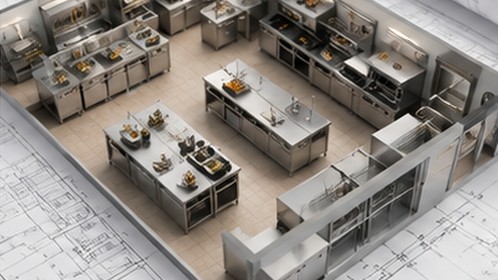
Five layout rules for a small stall
- Keep the cooking line under the exhaust hood and close to the mall duct point.
- Put the chiller and the prep table next to the cook, so the cook takes only one step to reach them.
- Keep clean and dirty items apart. Wash area goes to one corner.
- Leave a clear walking path so two staff can pass each other.
- Place the pass counter on the customer side, close to where the cooked food comes out.
Not sure how to fit it all? Our team can draw the layout for you. See our kitchen consultancy service and our guide on how to design a commercial kitchen.
Mall rules and licences to check before your food court kitchen setup
Rules change from one mall and one state to another. Ask the mall manager and your local authority for the exact list. This table shows what most owners need to check.
| Item | What it means for you | Who to ask |
|---|---|---|
| FSSAI licence or registration | Needed to sell food. The type depends on your size of business. | FSSAI office or website |
| GST registration | Needed when your sales cross the set limit, or if the mall asks for it. | Your accountant |
| Shop and establishment registration | State level registration for a shop or stall. | Local labour office |
| Fire safety | The mall may allow only some fuel types and ask for extinguishers. | Mall manager |
| Gas or electric | Some malls do not allow gas cylinders. This decides which machines you buy. | Mall manager |
| Power load | Check how many kilowatts your stall may use before ordering electric machines. | Mall electrician |
| Health trade licence | Local permission to run a food business. | Municipal office |
| Signage and counter look | The mall often has set rules for boards and counter design. | Mall leasing team |
This is a guide and not legal advice. Please confirm every item with the mall and the local authority.
Setting up a full food court with many outlets
If you are building a food court and not just one stall, the job is bigger. The stalls share power, drains, ducts and often the wash area. A wrong plan in one stall can slow down all of them.
Chefs Shop can plan and supply equipment for a multi outlet food court. We plan the shared areas first and then fit each stall inside them.
- Plan common wash, storage and waste areas
- Make a separate equipment list for each stall type
- Keep machines and spares similar across stalls, so repair and training stay simple
- Check power and exhaust load for the whole floor
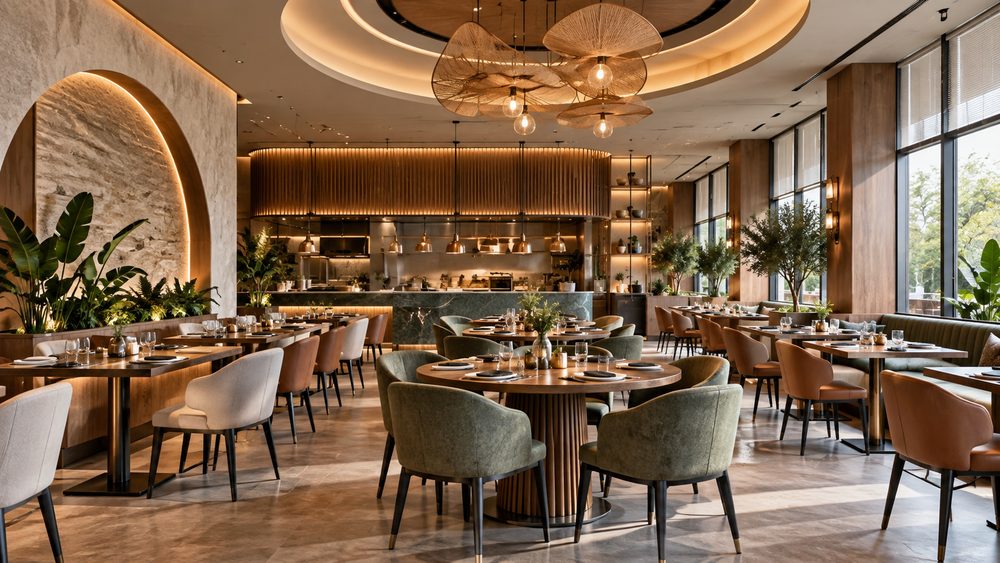
- Plan seating, counters and interior with the kitchens
We help with the plan, not only the machines
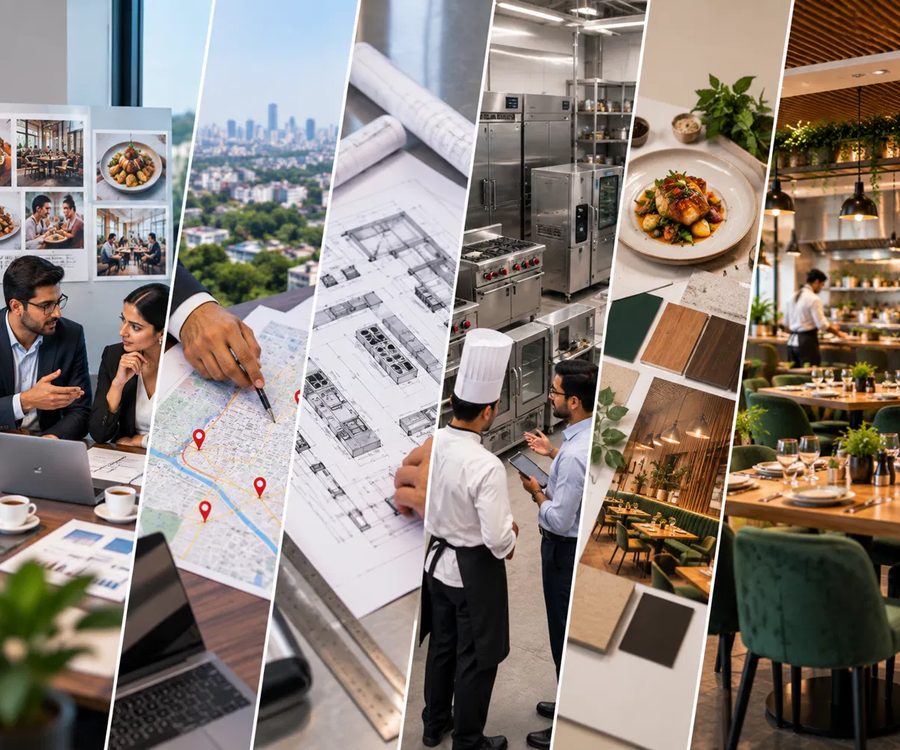
A kitchen works best when the plan is right. Chefs Shop can help with each step below, before and during your food court kitchen setup.
Location mapping
Find which mall or food court has the right crowd for your food.
Location mapping service
Conceptualization
Turn your food idea into a clear stall concept that fits the space.
Restaurant consultancy
Brand positioning
Decide your name, look and price level so people pick your stall.
F&B consultant servicesKitchen layout planning
Fit every machine in the space you get, with a clean food flow.
Kitchen consultancy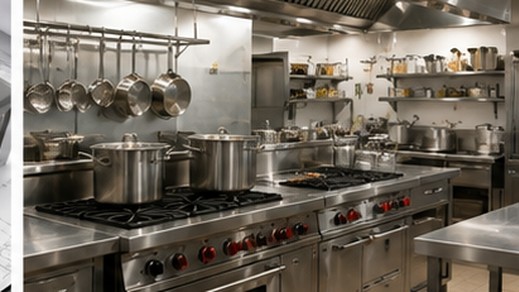
Kitchen equipment
Machines made in our factory and picked to match your menu.
Commercial kitchen equipment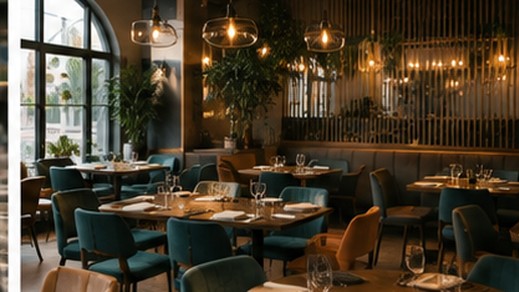
Interior planning
Plan the counter, seating and lights so the stall looks right.
Restaurant interior design
Six steps in a food court kitchen setup, from first call to first customer
Share your details
Tell us your menu, your stall size, your mall rules and your budget.
Check the location and concept
We look at whether the concept fits the mall and the crowd.
Plan menu and layout
We shorten the menu where needed and draw a layout that fits your counter.
Get the equipment list
You get a machine list with sizes, matched to your peak hour and your budget.
We make and send
Equipment is made in our factory and sent to your site in India.
Setup and support
We help you place the machines and stay in touch after you open.
Set your food court kitchen setup budget first. We build around it.
Chefs Shop offers kitchen setup packages for different budgets. The exact items depend on your menu, so share your menu and we will adjust the list.
Starter stall
For a small counter with a short menu and a few machines.
- Best for snacks, drinks and simple menus
- Read our guide on a kitchen setup under 50,000
Full small stall
For a stall that needs a cooking line, cold storage and a prep table.
- Best for Indian and Chinese stalls
- Read our guide on a kitchen setup under 1 lakh
Bigger counter or brand stall
For a busy stall with more machines, more storage and a faster line.
- Best for pizza, burger and multi dish menus
- Plan your spend with our kitchen budget planning guide
Want a full plan for your budget? See our turnkey kitchen setup service or call 97113 96397.
Six food court kitchen setup mistakes that cost owners money
Buying restaurant size machines
A big range looks good in a shop. In a small stall it blocks the line and wastes power.
Buying gas machines for a no gas mall
Ask the mall about gas first. A wrong order is hard to return after it is made.
Ignoring the power limit
Many electric machines together can trip the supply. Add up the load before you order.
Having no spare for the rush
If you have exactly the burners you need, one breakdown stops your lunch sale.
Leaving out the wash area
Plates and pots pile up fast. Plan the sink and rack on day one. See also our equipment buying mistakes guide.
Buying before the menu is final
Fix your menu first and then buy machines. Changing the menu later can leave you with unused equipment.
Buy from the maker, not from a middle man
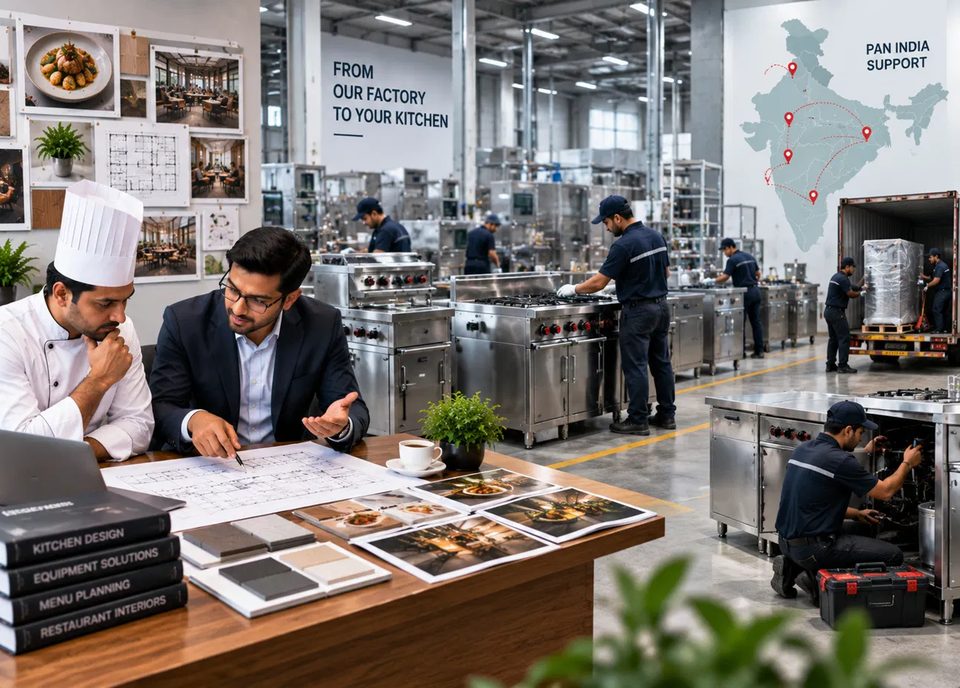
Chefs Shop is a food court kitchen equipment manufacturer. We make commercial kitchen equipment in our own factory, and we also plan the food court kitchen equipment and setup around it. When you talk to us, you talk to the people who build the machine. Learn more about us or read what customers say in our reviews.
- Planning and equipment from one team
- Machines picked for food court limits
- Clear advice on what you do not need to buy
- Support for stalls across India. See our delivery details
| Point | Trader or dealer | Chefs Shop |
|---|---|---|
| Who makes the machine | Bought from another maker | Made in our own factory |
| Price path | Each seller adds a margin | Direct from the maker |
| Food court advice | Sells what is in stock | Plans around your menu and mall rules |
| After sale help | Sends you to the maker | You deal with the maker directly |
Food court kitchen setup: your questions answered
What equipment do I need for a food court stall?
It depends on your menu. Most stalls need a cooking machine such as a range, griddle or fryer, a chiller or freezer, a prep table with a sink, a hood, and a hot holding counter. Use the zone checklist on this page, or send us your menu on WhatsApp and we will list only what you need.
How much space does a food court stall kitchen need?
Food court stalls are usually small, so the layout must fit the space the mall gives you. Share the stall drawing with us. We plan the machines to fit that space and keep a clear path for your staff.
Should I choose gas or electric machines for a food court?
Ask the mall first. Some malls do not allow gas cylinders, and some allow only piped gas. If gas is not allowed, you need electric machines, and then you must check the power limit of your stall.
Do I need an exhaust hood in a food court stall?
If you cook with heat, fry or grill, you almost always need a hood. It removes smoke, heat and oil vapour. The mall usually sets the rules for the duct, so confirm the connection point before you order the hood.
How do I decide the size of equipment for my peak hour?
Count the plates you expect to sell in your busiest hour. Divide that by the plates one burner or machine can make in an hour, then add one spare. The worked example in the sizing section shows the steps.
How much does a food court kitchen setup cost?
The cost depends on your menu, the machines and the size of the stall. We offer setup packages under Rs 50,000, under Rs 1,00,000 and Rs 2,00,000 and above. Tell us your budget and menu and we will suggest a list that fits.
Can you set up a full food court with many outlets?
Yes. We can plan the shared areas, make an equipment list for each stall type and supply the machines. Call us to talk about your food court.
Do you make the equipment yourselves?
Yes. Chefs Shop makes commercial kitchen equipment in its own factory. You deal with the maker, not with a middle man.
Which licences do I need to open a food court stall?
Most owners need an FSSAI licence or registration, GST registration where it applies, a shop and establishment registration, and a local health trade licence. The mall may ask for more. Confirm the exact list with the mall and your local authority.
Can you help with the menu and layout, or only with equipment?
We help with both. Our team can work on location mapping, menu planning, brand look, kitchen layout, interior planning and the full setup, along with the equipment.
More reading:
Ready to plan your food court kitchen setup?
Send your menu and stall size. We will reply with a machine list that fits your counter and your budget.
- Phone: 97113 96397 or 99990 01572
- Email: sales@chefsshop.in
- Or visit our contact page