
Restaurant Menu Planning Services and Menu Finalization
Our restaurant menu planning services help you decide what to sell, how many dishes to keep and what each dish should cost, before you buy a single machine. Once the plan is clear, we finalize the menu with a tasting, a cost check and a kitchen check, so the menu you print is the menu you can cook.
- Plan the menu before the kitchen and the interior
- Check every dish against your kitchen, staff and budget
- Get a written menu plan you can hand to your chef
Free first call. Available across India.
Tell us about your restaurant
What is restaurant menu planning, and what is menu finalization?
These two steps sound alike, but they do different jobs. One decides what the menu should be. The other locks it after it has been tested.
Restaurant menu planning
Menu planning is the work of deciding what your restaurant will sell and why. It covers your guest, the menu type, the number of dishes, the dish choice and the price range. It happens early, before the kitchen is built.
Menu finalization
Menu finalization is the last step. The dish list is cooked, tasted, costed and tested in a busy hour. When every dish passes, the menu is locked and the menu card is made.
| Menu planning | Menu finalization | |
|---|---|---|
| When it happens | At the start, before the kitchen and interior | After planning, just before opening or relaunch |
| Main question | What should we sell, and to whom? | Does every dish work in real life? |
| What you do | Choose guest, format, size and dishes | Taste, cost, test and sign off |
| What you have at the end | A draft dish list and price range | A locked menu and a menu card ready to print |
How to plan a restaurant menu in seven steps
This is how new restaurant menu planning works, whether you do it yourself or with a menu planning consultant. A consultant follows the same seven steps, and checks each one against real kitchen limits.
- 1
Know your guest
Decide who will eat at your place, how much they like to spend and how often they will come. A college crowd, an office crowd and a family crowd all want different food.
- 2
Choose a menu format
Pick how the menu will work: a la carte, set menu, limited menu, cycle menu, buffet, or combo and thali. The format decides how busy your kitchen will be.
- 3
Keep the number of items small
A small menu is faster to cook, easier to buy for and creates less waste. Start with fewer dishes and add more once you see what sells.
- 4
Pick the dishes
Choose a mix. A few dishes that bring guests in, a few easy dishes that sell all day, and one or two signature dishes that only you serve.
- 5
Check the ingredients
Can you buy each ingredient all year, near you, at a steady rate? Dishes that share ingredients save you money and waste.
- 6
Check the kitchen and the staff
Every dish needs a machine or burner, space on the line and a cook who can make it the same way every time.
- 7
Set the price range
Find the cost of each dish first. Then look at what your guests will pay. Set the price after you know both.
Why you should plan the menu before the kitchen and the interior
The menu decides the kitchen. Fried food needs fryers. Pizza needs ovens. Ice cream needs freezers and machines. If you build the kitchen first, you end up cutting good dishes because there is no space or no machine for them.
That is why we place the menu early in your complete restaurant setup:
What goes wrong when the menu comes last
- The kitchen is too small for the dishes you want to sell.
- There is no place for a fryer, a grill or a fridge, so dishes are dropped.
- Gas and power points are in the wrong place and must be moved later.
- You overspend on machines for dishes that never sell. Our kitchen budget planning blog shows how to avoid this.
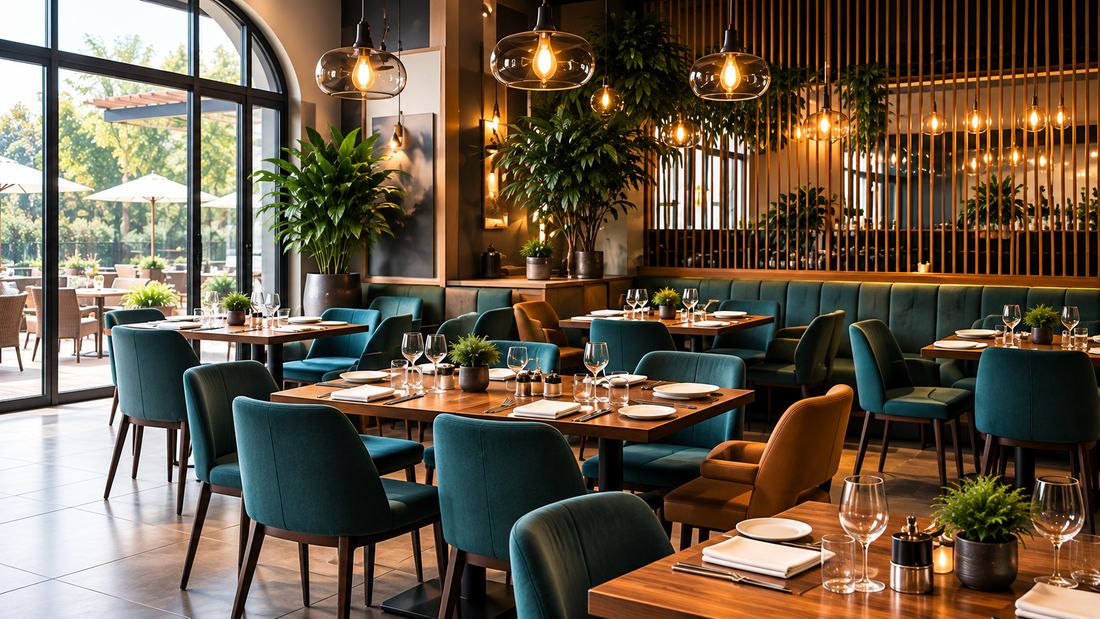
Menu planning, finalization, development and engineering: what is the difference?
Many people use these words as if they mean the same thing. They do not. Each one is a different stage of the menu.
| Term | What it means | When you need it |
|---|---|---|
| Menu planning | Deciding what the menu should be: guest, format, size and dishes | Before you build or relaunch |
| Menu finalization | Testing the planned menu and locking it | Just before opening |
| Menu development | Turning each dish into a tested recipe with fixed portions | When dishes need recipes and standards |
| Menu engineering | Studying sales of a running menu to keep earners and drop weak dishes | After you have sales data |
Already have a locked menu and want to improve it dish by dish? See our menu development and engineering services.
Nine decisions your menu plan will settle
You do not need to know the answers. Our restaurant menu planning services start with simple questions, give you clear choices and write down what you pick.
Concept and guest
Who you serve and why they will choose you over the shop next door.
Format and number of items
Which menu type fits your place and how many dishes your kitchen can handle.
Sections and order
How the menu is grouped, so guests find what they want in seconds.
Dish selection
Which dishes stay, which go and which become your signature dishes.
Ingredients and supply
Which ingredients are easy to buy and which dishes share them.
Veg, non-veg, Jain and allergy labels
Clear labels so guests choose with confidence and your staff answer questions the same way.
Cost per dish and price range
What each dish costs you and the range where it should sell.
Kitchen, machines and staff fit
Which machine, burner and skill each dish needs, and where there are gaps.
Dine-in and delivery menus
Whether you need one menu or two, and which dishes travel well.
Menu finalization for restaurants: six checks every dish must pass
A menu on paper can look perfect and still fail on the first busy Saturday. These six checks catch the problems while they are still cheap to fix.
Tasting trial
Every dish is cooked and tasted. Taste, look, portion size and plating are checked. Dishes that are not good enough are fixed or dropped.
Cost sign-off
The cost sheet is checked line by line. You see what every dish costs before the price is fixed.
Busy-hour test
Several dishes are cooked together, as in a rush. We watch for slow dishes and clashes on the same burner or fryer.
Equipment check
Each dish is matched to a machine. If a machine is missing, it is marked on the list so you can plan for it.
Staff briefing
Your cooks and servers learn each dish, its portion, its labels and how to explain it to a guest.
Menu card ready
Dish names, descriptions, labels and sections are written in simple words and ready for the designer or printer.
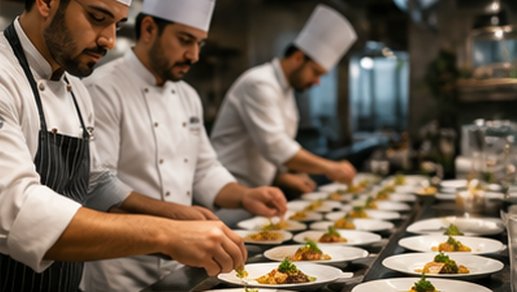
Six steps from first call to final menu
At every step we tell you what we are doing and what we need from you. How long it takes depends on the menu size and the menu format. We share the timeline after the first call.
First call
We doWe listen to your idea, your place and your budget range.
You doShare your concept, your city or area and what you hope to sell.
Guest and menu format
We doWe suggest the menu type and the right size for your kitchen.
You doConfirm the guest and the format that feel right to you.
Draft menu plan
We doWe write the dish list with sections, ingredients and kitchen needs.
You doCross out anything you do not like and add dishes you must have.
Cost and price range
We doWe work out the cost of every dish and a fair price range.
You doShare local ingredient rates if you have them.
Tasting and kitchen check
We doWe run the tasting, the busy-hour test and the equipment check.
You doTaste honestly and tell us what you think.
Final menu and handover
We doWe lock the menu, hand over the written pack and brief your staff.
You doSign off the final list.
Menu planning for every kind of food business
A dhaba, a hotel and a hospital canteen all need a menu. The plan is different for each, so we start from your place and your guest.
New restaurant
You have an idea and a space, but no menu yet. We help you plan the whole menu from the start, so the kitchen and the interior are built around it.
Running restaurant that needs a reset
Your menu is too long, the kitchen is slow or profit is low. We clean up the list and plan how to move to it.
Cloud kitchen
Delivery only means the menu must travel and pack well. Our cloud kitchen menu planning keeps the list short and the ingredients shared. See also our guide to starting a cloud kitchen from home.
Cafe and quick service
Fast orders need fast dishes. We plan a menu that your small team can make in a few minutes, again and again.
Dhaba and family restaurant
Big menus are common here, and they often cause waste. We help you keep the best sellers and cut the rest. Read about common dhaba kitchen equipment mistakes too.
Hotel and banquet
Large batches, set menus and buffets need careful planning for holding, serving and staff. We plan the menu to match your kitchen.
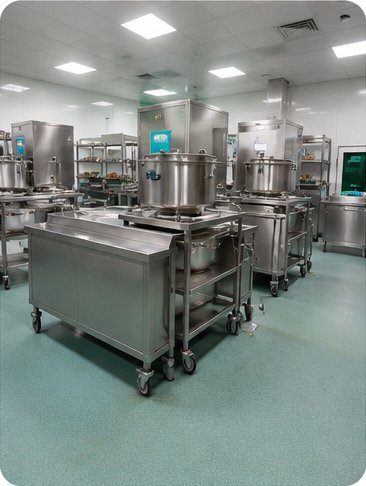
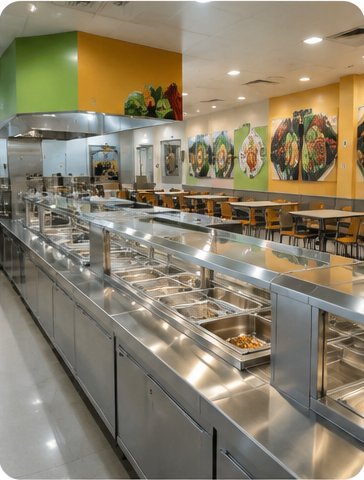
Canteens, messes and institutional kitchens
Hospitals, schools, colleges, army messes and office cafeterias serve the same guests every day. Their menus must be balanced, repeat on a schedule and be cooked in large batches. We plan cycle menus that keep buying steady and the kitchen calm.
Types of restaurant menus and the load each puts on your kitchen
The menu type you choose decides how hard your kitchen will work. Here is a simple view.
| Menu type | Best for | Load on the kitchen |
|---|---|---|
| A la carte | Sit-down restaurants | High. Many different dishes, each cooked fresh to order. |
| Set menu | Banquets and events | Low to medium. The same dishes are cooked together. |
| Limited menu | Cloud kitchens, cafes, quick service | Low. Few dishes and fast preparation. |
| Cycle menu | Canteens, hospitals, hostels | Medium. The menu repeats on a schedule, so buying stays steady. |
| Buffet | Hotels and weddings | High at the start, steady after. Large batches and hot holding. |
| Combo and thali | Dhabas, fast food, delivery | Medium. Fixed sets of dishes make packing quick. |
What your menu tells you about the machines you need
Every dish points to a machine. Use this list to see what your planned menu will ask from your kitchen. Our equipment check marks any gaps before you spend money on commercial kitchen equipment.
| If your menu has | Your kitchen needs |
|---|---|
| Fried snacks, fries, chicken, pakoras | Commercial fryers |
| Grilled items, tikka, kebabs, sandwiches | Heavy duty grill |
| Pizza, bread, cakes, cookies | Ovens, proofing chamber and mixers |
| Dosa, parathas, burgers, egg dishes | Griddles |
| Cold items, salads, dairy, frozen stock | Chillers and deep freezers |
| Ice cream, shakes, slush | Ice cream machines and shake machines |
| Momos, dumplings, steamed snacks | Momo steamer and sheeter |
| Coffee, cold drinks, mocktails | Coffee machines and ice cube machines |
Your menu pack, in writing
At the end you hold clear papers, not just advice. You can give them to your chef, your designer and your team.
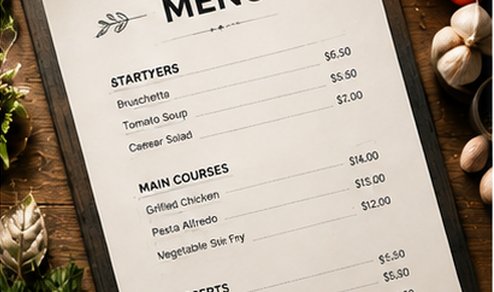
Sample menu card for illustration.
Final menu list
Every dish, grouped by section, with veg, non-veg, Jain and allergy labels.
Cost and price range sheet
The cost of each dish and the price range where it should sell.
Equipment list matched to the menu
Which machine each dish needs, with the gaps marked.
Menu card content
Dish names and descriptions in simple words, ready for design and print.
Staff briefing sheet
Portion, steps, labels and how to explain each dish to a guest.
Seven menu planning mistakes that cost restaurants money
We see the same mistakes again and again. Avoid these and you are already ahead.
Too many items
A long menu slows the kitchen, fills the fridge and makes more waste. Guests also take longer to choose.
Copying a nearby menu
Their kitchen, staff and guests are not yours. A copied menu often fails for reasons you cannot see.
Ignoring the kitchen
A dish that needs a machine you do not have will be slow, or will never be made.
One price for dine-in and delivery
Delivery has packing and app costs. The same price can mean lost profit.
Ingredients that are hard to buy
If supply stops for a week, the dish is off the menu and guests are upset.
Never testing a busy service
A dish that is fine for one order can break the line when ten orders arrive.
Skipping the staff briefing
If your staff cannot explain a dish the same way every time, guests lose trust.
Menu planning is one part of your complete restaurant setup
You can take menu planning on its own, or as a step in a full plan. Our restaurant kitchen setup checklist shows how the steps fit together.
Location mapping
Find the right spot and the right guests before you sign a lease. Read about our location mapping for a cafe or restaurant.
Concept and planning
Decide the idea, size and plan of the business. Read about our restaurant consultancy services.
Menu planning and finalization
This page. Plan the menu, test it and lock it.
You are hereKitchen planning and equipment
Plan the kitchen around the menu and choose the machines. Read about our commercial kitchen equipment.
Interior planning
Design the dining space, counters and flow. Read about our restaurant interior design.
Brand positioning
Name, look and message that match the menu and the guest.
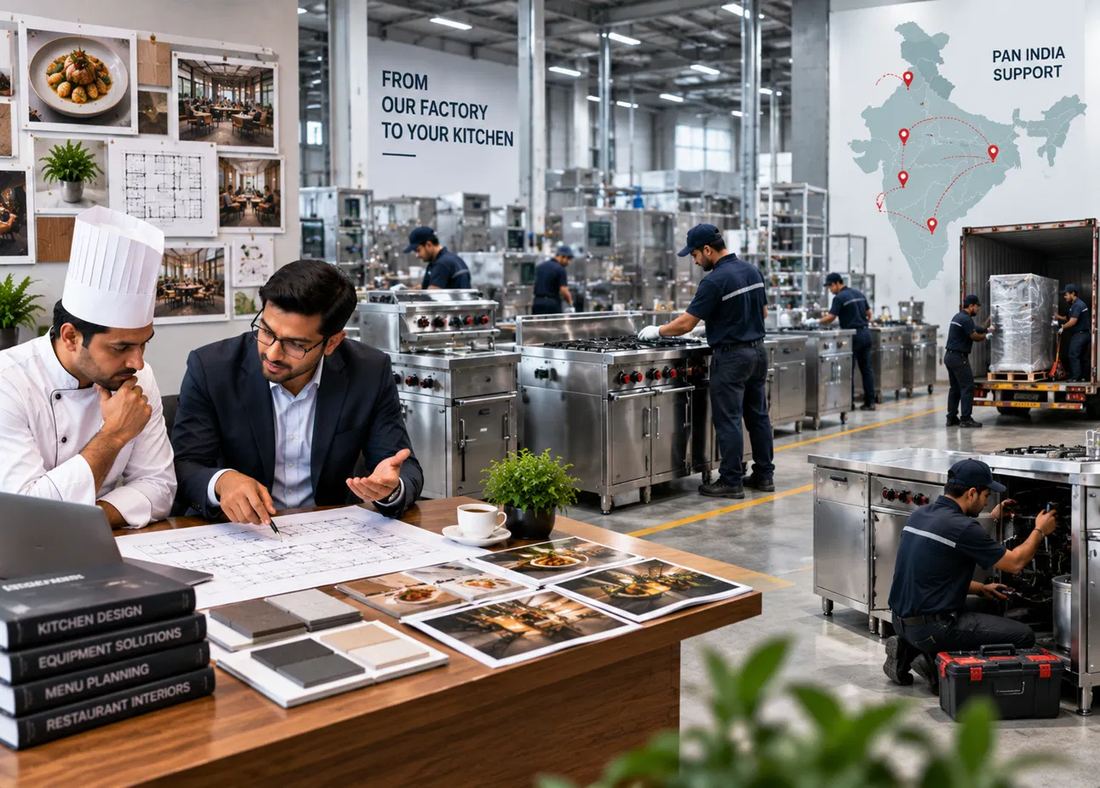
A menu only works if your kitchen can cook it
Most restaurant menu planning services stop at the paper. Chefs Shop makes commercial kitchen equipment in its own factory, so the same team that plans your menu can check it against a real kitchen, and make a machine if one is missing.
We are a maker, not a dealer or an importer, so our advice on machines is not tied to what a trader has in stock. We serve restaurants, cloud kitchens, hotels and canteens across India.
Restaurant menu planning: your questions answered
What is restaurant menu planning?
Restaurant menu planning is the work of deciding what your restaurant will sell. It covers who your guest is, what type of menu suits you, how many dishes to keep, which dishes to pick and what price range works. It is done before you buy equipment or design the space.
What is menu finalization?
Menu finalization is the step where you lock the menu. The dish list is tested with a tasting, a cost check, a busy-hour test and an equipment check. When every dish passes, the menu is signed off and the menu card is made.
How do I plan a menu for a new restaurant?
Start with your guest, not your dishes. Decide who will eat, how much they like to spend and how often they will visit. Then pick a menu format, keep the dish count small, check ingredients and kitchen fit, and set a price range after you know the cost of each dish.
How many items should a restaurant menu have?
Start small. A small menu is quicker to cook, easier to buy for and creates less waste. It is easier to add a dish later than to remove one that guests already love. The right number depends on your menu format, kitchen size and staff, and we set it with you in the plan.
What is the difference between menu planning, menu development and menu engineering?
Menu planning decides what the menu should be. Menu finalization locks it after testing. Menu development turns each dish into a tested recipe. Menu engineering studies sales of a running menu to keep the dishes that earn and drop the ones that do not. You can read more on our menu development and engineering page.
Should I finalize the menu before the kitchen and interior?
Yes. The menu tells you which machines, burners, fridges and counters you need. If the kitchen is built first, you end up cutting good dishes because there is no space or no machine for them. Plan and finalize the menu first, then design the kitchen and the interior.
How do I decide which dishes to keep and which to drop?
Ask four questions of each dish. Does your guest want it? Can your kitchen make it fast in a busy hour? Can you buy the ingredients easily? Does it leave you a fair profit after cost? A dish that fails two or more of these is a good one to drop.
How do I price my menu?
Work out the cost of each dish first. That means every ingredient, the oil, the packing for delivery and the waste. Then look at what your guests in your area are willing to pay. The price sits between the two. We build a cost sheet for every dish so you can see this clearly.
Is cloud kitchen menu planning different?
Yes. A cloud kitchen has no dine-in guests, so the menu must travel well, pack well and cook fast from a small space. Dishes that go soft or cold in a box are poor choices. Cloud kitchen menus are usually smaller and built around a few ingredients that many dishes share.
Should delivery prices be different from dine-in prices?
Often, yes. Delivery has extra costs such as packing and app charges, and some dishes do not travel well. Many owners keep a separate delivery menu with fewer dishes and its own prices. We plan the dine-in menu and the delivery menu as two lists when you need both.
How often should I change my menu?
Do not change the whole menu often. Keep the dishes that sell and review the menu now and then using your sales data. Change a few dishes at a time, and test each new dish before it goes on the card.
Can you plan a menu for a restaurant that is already running?
Yes. Many owners come to us when the menu has grown too long, the kitchen is slow or profit is low. We look at your present menu, your kitchen and your guests, then give you a cleaner menu list with a plan to move to it.
How long does menu planning take?
It depends on the menu size and the menu format. A short cafe menu takes less time than a large menu for a hotel or a banquet. We share the timeline after the first call, once we know what you need.
How much does menu planning cost?
The first call is free. After that, the fee depends on the size of the menu and the type of restaurant. Call or message us and we will share the details after we understand your plan.
Ready to plan a menu that your kitchen can cook?
Tell us about your place. Our restaurant menu planning services begin with a call where we listen, ask simple questions and tell you where to start. The call is free.