
Most restaurant kitchens are placed well on the day they open. The fridge sits where the cook can reach it, the range sits under the hood, and the sink is close to the wash area. Then the menu grows. A new dish needs a new shelf. A busy Friday needs an extra table pushed into the walkway. Over a year or two, small changes pile up, and one day the kitchen just feels slow, even though nobody ever planned it that way.
If this sounds like your kitchen, the good news is that most bad kitchen equipment placement can be fixed without breaking a single wall or moving a single drain. This guide walks through how to find the real problem, what you can fix for free, and when a small bit of work is actually worth it.Why Kitchen Equipment Placement Quietly Breaks Down Over Time
No restaurant owner sets out to build a kitchen with equipment in the wrong place. It happens step by step. A restaurant that started with twenty covers now serves fifty, and a menu with ten items now has thirty. Each new dish needed a new pan or a new prep table, and each one went wherever there was free floor space that day, not where it made sense for how the kitchen actually works.Staff also change things on their own, often for good reason. A cook moves a spice rack closer to the range because reaching across the kitchen twenty times a shift is tiring. A dishwasher pushes a bin near the back door because that is where deliveries come in. None of these choices are wrong on their own. But add enough of them together over a year, and a kitchen that once worked well starts to fight the people working in it.The point of this guide is not to tell you to start over. A full renovation costs a lot, it closes your kitchen for days or weeks, and most of the time it is not what the problem actually needs. Fixing kitchen equipment placement is almost always about moving what you already own, not buying new equipment or breaking open the floor.Signs of Restaurant Kitchen Equipment Placement Mistakes You Can Spot Today
You do not need a consultant to tell you something is wrong. Most restaurant kitchen equipment placement mistakes show up in small, daily moments that are easy to miss because staff have learned to work around them. Watch for these during a normal service:- Two staff members needing to stand in the same narrow spot at the same time, several times an hour
- A cook walking past the same three stations to reach one ingredient
- Raw meat or vegetables passing close to cooked food on their way to the range
- Delivery boxes blocking the kitchen entry during service hours, not just before opening
- Counters that slowly fill up with pans, trays, and tools that have no proper place to sit
- A handwash station that staff quietly avoid because it is inconvenient to reach
- The same complaint from more than one cook, even if they never worked together before
How to Check Your Kitchen Layout Without Stopping Service
Before moving anything, spend a few days watching how the kitchen actually works. This costs nothing and tells you far more than guessing.- Follow one order from start to end.Pick a single ticket during a busy hour and watch it the whole way, from the moment it is called out to the moment it leaves the pass. Note every time it waits, every time someone has to ask a question, and every time the same plate gets picked up and put down. This alone usually points straight at the problem.
- Watch a real rush, not a quiet afternoon.A layout can look fine when the kitchen is half empty. The real test is a Friday night or a Sunday lunch, when every station is working at the same time.
- Ask your staff directly.The people cooking every day usually know exactly where the kitchen slows them down, even if nobody has asked them before. A short, honest talk with your head cook often saves days of guessing.
- Try it on paper or tape first.Before you move anything heavy, mark the new arrangement on the floor with tape and walk through a pretend rush with your team. This catches a mistake before it costs you a day of work moving something back.
How to Rearrange Restaurant Kitchen Equipment Without Touching a Wall or a Drain
The most important rule in fixing a kitchen without renovation is simple: leave the fixed points where they are, and move everything else around them. Your gas line, your exhaust duct, your floor drain, and your grease trap are expensive and messy to move, since shifting any one of them usually means breaking the floor or the wall. Everything else in most kitchens can move with a little planning and no construction at all.Here is what you can usually fix without spending much money at all:- Prep tables and shelving. These are rarely fixed to the floor. Moving them to open up a walkway or shorten a cook’s daily steps is one of the cheapest fixes there is.
- Clutter on counters. A counter full of pans and tools with no home is not a placement problem, it is a storage problem. Adding a shelf or a hook often solves it in an afternoon.
- Vertical space. The top of a tall fridge or a quiet corner above eye level is often free space nobody is using. A simple shelf there can clear a counter below it.
- Wheeled equipment. Anything on caster wheels, from a prep trolley to a mobile grill counter, can move to a better spot in minutes, with no plumber or electrician needed. This is why more kitchen equipment in India is now built on a mobile base instead of fixed in place.
Restaurant Kitchen Equipment Placement Rules That Actually Work
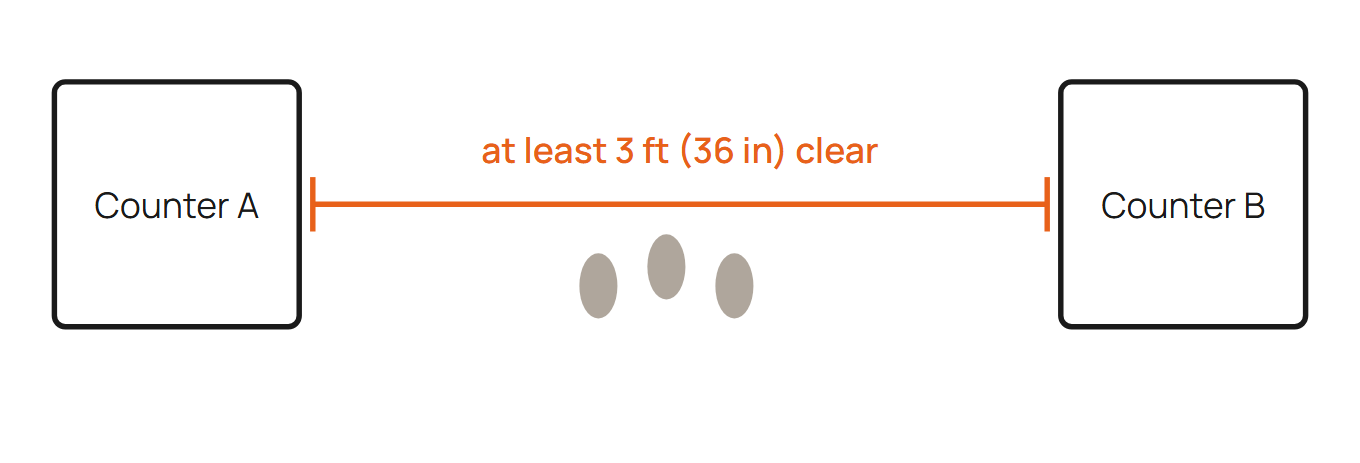
A lot of kitchen advice online talks about the “work triangle,” the idea of keeping your fridge, sink, and stove close together in a triangle shape. This idea comes from home kitchens, built for one person cooking alone. It does not really apply to a restaurant kitchen, where four to twelve people may be working at the same time across different stations. A busy restaurant kitchen needs a working plan built around stations and the direction food actually moves, not a triangle built for a single home cook.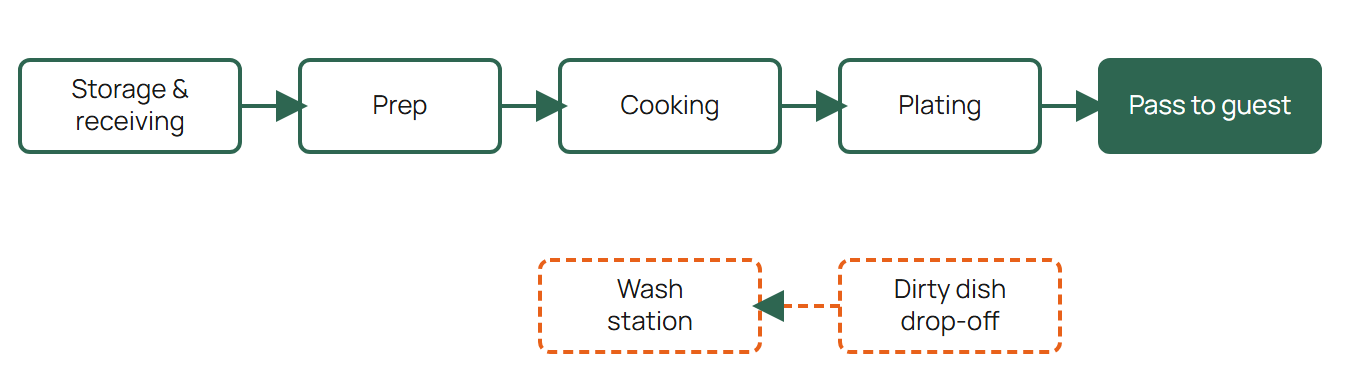
Common Restaurant Kitchen Layout Mistakes Most Owners Miss
Beyond the placement of any single piece of equipment, a few restaurant kitchen layout mistakes come up again and again, in kitchens of every size.| Mistake | Why it hurts |
|---|---|
| Receiving area too small | Delivery boxes end up in the middle of the kitchen, blocking movement every time a delivery arrives |
| No separate path for dirty dishes | Used plates cross the same path as fresh food, which is a hygiene risk during a busy service |
| Handwash station hard to reach | Staff wash their hands less often when it means walking to the far end of the kitchen |
| No room left to grow | A kitchen using every inch on day one has nowhere to add a second range or fridge later |
| Only planned for a quiet day | A layout that works fine on a Tuesday can fall apart during a festival weekend or wedding season |
How to Fix Kitchen Layout Without Renovation When Some Work Is Genuinely Needed
Sometimes rearranging is not enough, and a small amount of work cannot be avoided. Maybe a gas point genuinely needs to move a few feet, or a second handwash point needs a new water line. Even here, you do not need to close your restaurant for weeks.- Work on one station at a time. Fix the wash area this month and the cooking line next month, instead of shutting the whole kitchen down at once. This keeps most of your kitchen earning money while the rest gets sorted.
- Do the work during your slowest hours. Early morning, late night, or your weekly slow day is often enough time for a plumber or electrician to finish a small job without touching your service hours at all.
- Run a shorter menu for a few days if needed. If one station is genuinely out of use for a day or two, a smaller menu built around what still works keeps your restaurant open instead of fully closed.
Give Your Staff Time to Adjust to the New Kitchen Equipment Arrangement
One thing almost every restaurant owner gets wrong after fixing a layout is expecting it to work well on day one. A kitchen redesign study tracked the actual footsteps of restaurant kitchen staff with a pedometer, before a layout change, right after it, and two months later.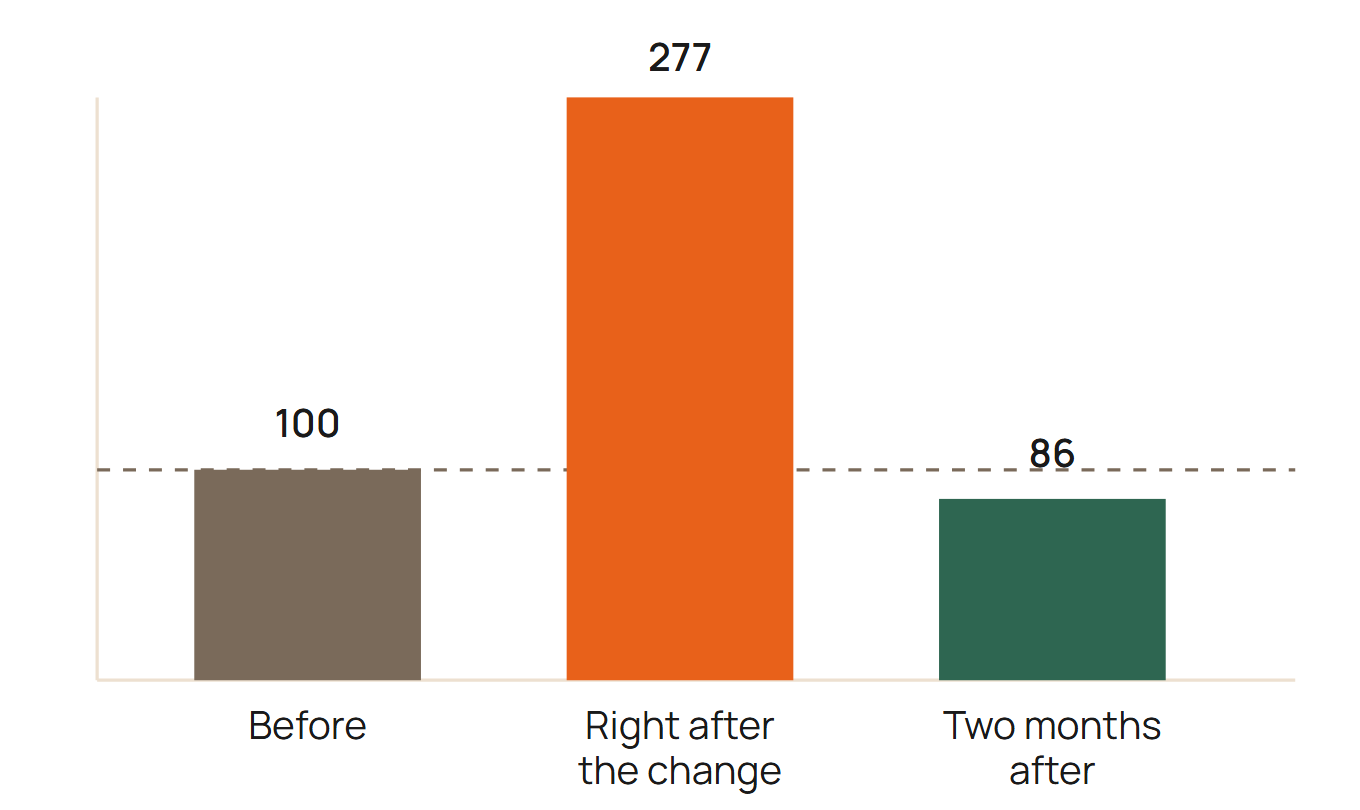
One FSSAI Rule Most Restaurant Owners Miss After Rearranging the Kitchen
FSSAI rules ask a food business to tell the licensing authority about a layout change before making it, since the layout plan was part of what your license was granted on in the first place.
For a small change, like moving a prep table, this rarely causes any real problem in practice. But if you are making a bigger change, moving a cooking line or adding a new station, it is worth checking with your local FSSAI office or a compliance consultant before you finish the work, not after. This is general guidance and not legal advice, and the exact rule can vary a little by state, so always confirm with your local office for anything beyond a small, simple change.When to Bring In a Restaurant Kitchen Layout Designer
Most small placement problems can be fixed by an owner and a head cook, with an afternoon of moving things and a week of watching how it works. A few situations are worth outside help: when the fix needs a utility point to move, when a new menu section changes how the kitchen needs to flow, or when you have already tried moving things twice and the problem is still there.At Chefs Shop, we build commercial kitchen equipment in our own factory, and we also help restaurant owners plan kitchen layouts around the space they already have, instead of starting from a blank page. If your kitchen has reached the point where a proper plan makes more sense than another round of trial and error, our kitchen consultancy service is a good place to start.Frequently Asked Questions
Do I need to tell FSSAI if I rearrange my kitchen equipment?
For a small change, like moving a prep table or a shelf, this is not something most restaurants report. For a bigger change, like moving your cooking line or adding a new station, FSSAI rules ask you to inform the licensing authority before the change, since your original license was granted against the layout you submitted. Check with your local FSSAI office if you are not sure whether your change counts as small or big.
How much does it cost to fix a bad kitchen layout without renovation?
If the fix only needs moving equipment that already sits free on the floor, like tables, shelves, or wheeled units, the cost can be close to nothing beyond a few hours of staff time. Cost only goes up once you need an electrician, a plumber, or a fabricator, and even then, a small job works out far cheaper than a full renovation.
Can I move my kitchen equipment without moving the exhaust hood?
Yes, in most cases. As long as your cooking equipment stays under the existing hood, you can rearrange prep tables, storage, and cold units freely around it. Problems only come up if you want to move a range or a tandoor to a spot the current hood does not cover.
How do I know if my kitchen layout is really the problem, and not my staff?
Watch the same task done by two different staff members. If both of them struggle with the same step, in the same spot, the layout is very likely the problem. If only one person struggles while everyone else manages fine, it may be more about training than placement.
Is it normal for things to feel worse right after I rearrange my kitchen?
Yes, and this is one of the most common reasons owners give up on a good change too early. Staff need time to build a new habit around a new layout. Give it close to a month before deciding whether the change actually worked.
Can heavy equipment like a tandoor or a fryer be placed on wheels?
Many manufacturers now build tandoors, grills, and counters on a mobile base with locking wheels, which makes them far easier to move than a fixed unit. If you are buying new equipment, choosing a wheeled version, where it is available, gives you more room to fix your layout later without any construction at all.
Should I close my restaurant to fix the kitchen layout?
Almost never, for a placement fix. Most rearranging can be done during closed hours, overnight, or on your slowest day of the week. A full closure is usually only needed for a proper renovation, not for moving equipment around inside a kitchen that already exists.
How often should I check my kitchen layout as my restaurant grows?
A good time to check is any time your menu grows by a noticeable amount, your covers increase, or you add a new piece of equipment. A quick walk-through with your head cook once or twice a year is often enough to catch a small problem before it turns into a big one.

